Making a Quiet Moss Terrarium: A Studio Notebook on Design, Build, and Care
Question
Can a small glass container host a low-maintenance, slow-growing green world that brings a little calm to a kitchen windowsill or side table? This notebook explores building a quiet moss terrarium with a clear question: how to create a resilient, low-intervention miniature landscape using everyday materials.
Process: Step-by-Step Method
Notes below document a reproducible routine I used across three small jars. Aim: a stable, clean-looking terrarium that requires occasional monitoring but no daily care.
- Gather materials
- Clear glass container with or without a lid (wide mouth jars, small fishbowls, or apothecary jars work well)
- Small pebbles or coarse gravel (drainage layer)
- Activated charcoal (thin layer to keep water fresh; optional but recommended for closed vessels)
- Well-draining potting mix or a blend of potting soil and coarse sand
- Live sheet moss or patch moss collected ethically from your yard/forest or purchased from a nursery
- A few decorative elements: small bark pieces, twigs, or a tiny ceramic figurine (optional)
- Tools: spoon, long tweezers or chopsticks, spray bottle with water
- Prepare the base
Start with a 1–2 cm layer of pebbles for drainage. Add a thin 0.5–1 cm layer of activated charcoal if using. This keeps the micro-environment fresher in closed containers.
- Add substrate
Place 3–5 cm of potting mix on top of the drainage layers—enough to anchor moss and any small plants. Compress lightly to avoid air pockets but keep it loose enough for moisture movement.
- Arrange hardscape
Position bark, stones, or twigs to create mini-elevations or sheltered spots. These shape how water pools and how light moves across the moss.
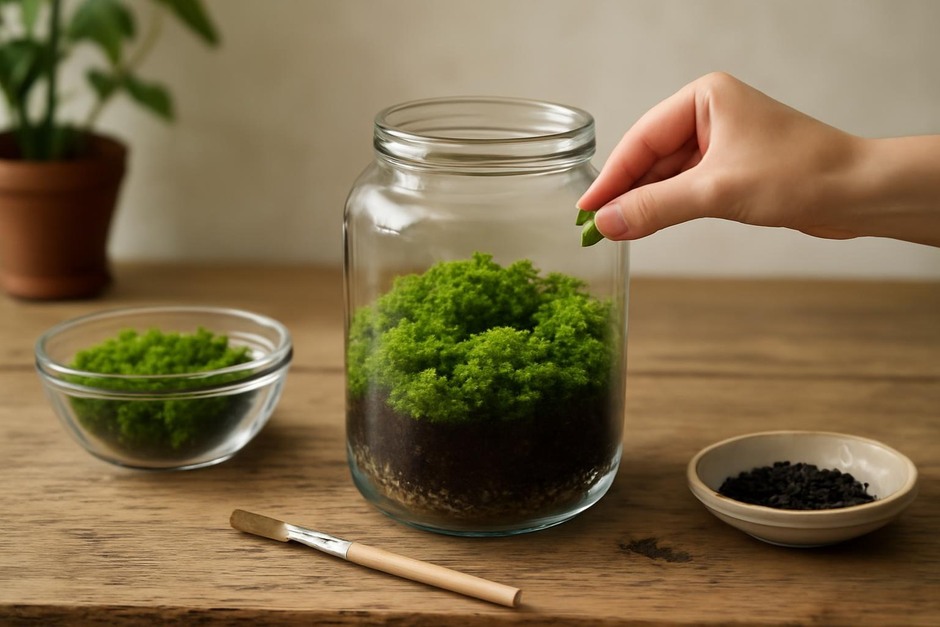
- Place the moss
Gently press patches of moss onto the substrate so they make good contact. Use tweezers for precision. Slight overlap between moss pieces helps them knit together over time.
- Initial watering
Lightly mist the moss until it feels damp but not waterlogged. For open terrariums, a little more frequent misting is fine; for closed jars, only moisten once initially and monitor condensation.
- Close or leave open
Place the lid on for a self-contained ecosystem that recirculates moisture. Leave slightly ajar if you worry about mold early on—or omit the lid entirely for a terrarium that dries between waterings.
- Position and observe
Set the terrarium in bright indirect light. Avoid direct midday sun against glass. Keep a studio notebook or simple log: date built, light exposure, initial watering, and first observations.
Variations
- Open moss tray — Use a shallow, open container and include sand or pebbles to create a Zen-like moss carpet that tolerates occasional drying.
- Mini-forest mix — Add a tiny fern or a fittonia seedling for contrast; place it near a side with more substrate depth and slightly higher light tolerance.
- Stone and moss vignette — Favor hardscape: stack flat stones and let moss nestle in shallow crevices for a bonsai-rock aesthetic.
- Seasonal accents — Swap in small pinecones, dried seed heads, or a ribbon for holiday or seasonal moods; avoid chemicals or glitter.
Troubleshooting
Common issues from my practice and simple remedies:
- Excess condensation — If the lid clouds and water beads heavily, open the jar for a few hours a day until it clears, then reduce watering. Excess condensation indicates too much moisture or too little ventilation.
- Mold or white fuzz — Remove affected patches with clean tweezers. Improve airflow by cracking the lid and reduce watering. A small amount of white fuzz may disappear as the system stabilizes.
- Moss yellowing or drying — Usually from too much light or under-watering. Move to gentler light and mist gently. For open terrariums, increase mist frequency; for closed ones, expose briefly and mist sparingly.
- Pests — Small gnats can appear in rich substrate. Let the surface dry slightly, remove decaying bits, and consider replacing the top centimeter of substrate if problems persist.
Review: What Worked and What I Learned
Studio takeaway: moss terrariums reward observation more than intervention. My most resilient builds used modest substrate depth, a thin charcoal layer, and bright indirect light. Closed jars stabilized quickly but required careful initial moisture management; open dishes feel more forgiving and invite seasonal changes.
Final note: think of a moss terrarium as a slow companion. Keep a short log for a few weeks—light, moisture, and small adjustments—and you’ll develop a gentle rhythm that keeps the miniature landscape calm and healthy.